

Siegmund Josephi
* 1908
HIER WOHNTE
SIEGMUND JOSEPHI
JG. 1908
DEPORTIERT 1943
THERESIENSTADT
1944 AUSCHWITZ
ERMORDET 21.12.1944
DACHAU
Großneumarkt 56
Related Stolpersteine in Großneumarkt 56: Minna Levin | Jacob Hermannsen | David Hermannsen | Ruth Nathan | Elsa Nathan | Bernhard Weil | Rosa Therese Weil | Martha Minna Fernich | Helene Martha Fernich | Robert Martin Levy | Bertha Polack | Bertha Cohen | Eva Samuel | Hertha Liebermann | Josef Polack | Sella Cohen | Louisa(e) Elias | Theresia Elias | David Elias | Bela Neumann | Therese Neumann | Max Leo Neumann | Mirjam Neumann | Lieselotte Neumann | Fanny Neumann | Siegfried Neumann | Fritz Mainzer | Camilla Fuchs | Thekla Daltrop | Siegfried Weinberg | Rosa Weinberg
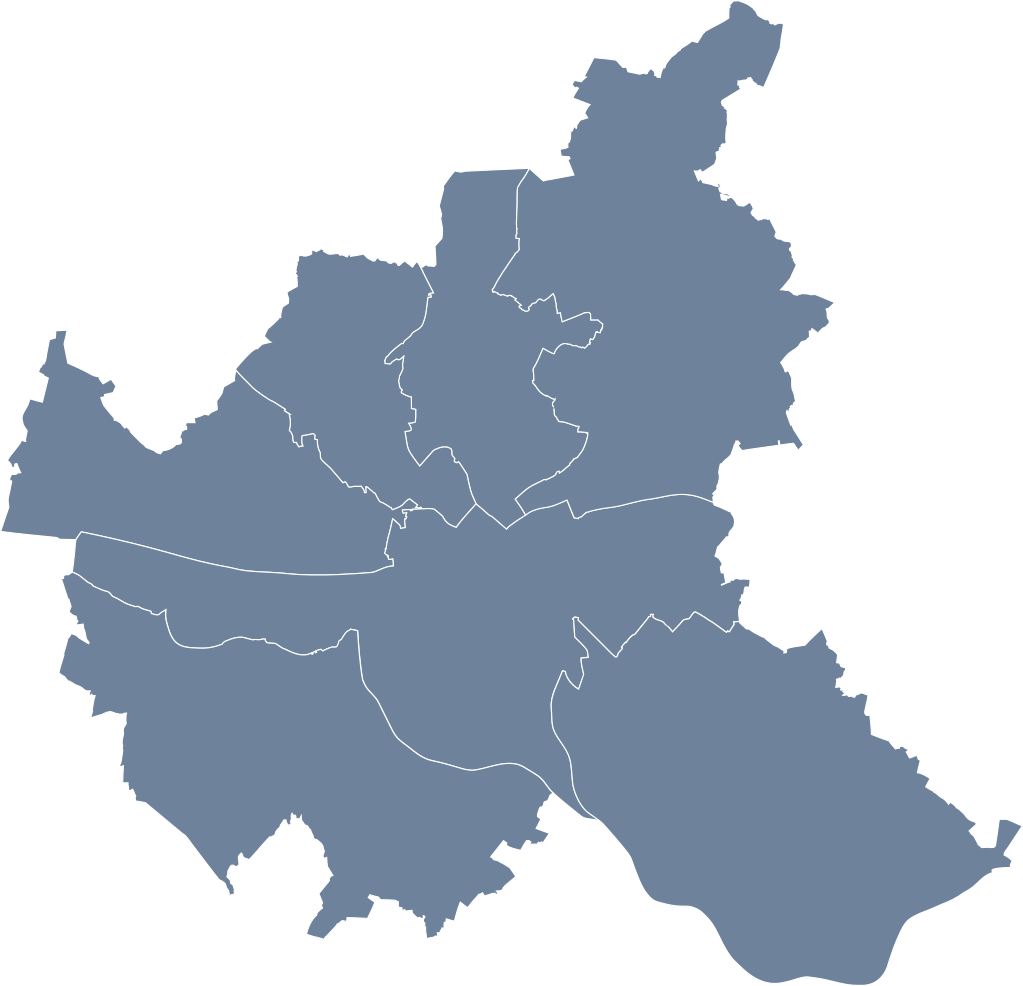

Großneumarkt 56
Siegmund Josephi, born on 22 June 1908 in Hamburg, deported 9 June 1943 to Theresienstadt, deported further on 29 Sept. 1944 to Auschwitz, date of death 21 Dec. 1944 in the Dachau concentration camp, Kaufering subcamp
Grossneumarkt 56
The parents of Siegmund Josephi had married on 22 June 1907 in the birthplace of the mother, Obersitzko in Posen (today Obrzycko in Poland). Exactly twelve months later, to the day, Siegmund was born in Hamburg.
His parents Moritz Josephi (born on 22 Apr. 1876) and Hedwig, née Leiserowitz (born on 29 Dec. 1881), had named their son after the late Hamburg grandfather on his father’s side.
Siegmund grew up in the area of the Grossneumarkt; first at Elbstrasse 45 (today Neanderstrasse), then at Schlachterstrasse 32/33, before the family finally got an apartment in the Jewish Hertz-Joseph-Levy-Stift at Grossneumarkt 56 in 1914. In the immediate vicinity, at Schlachterstrasse 46/47, Siegmund’s widowed grandmother from Obersitzko, Amalie Leiserowitz, née Abraham (born on 22 May 1948, died on 27 Dec. 1929), resided with her son Bernhard and daughter-in-law Gertrud Leiserowitz (see corresponding entry). She had followed her children to Hamburg.
Siegmund’s father, Moritz Josephi, worked as an office clerk (accountant), from the early 1920s, as a registrar official at the Czechoslovak Bank Corporation, Hamburg branch, then until 1929 again as an office clerk of the Nebel & Sander Company, which operated several stores selling linen and cotton goods in Hamburg. He lost both positions due to “job cuts” as a result of the global economic crisis. He had to give up a temporary job at the St. Pauli-Eimsbüttel tax office due to illness in Mar. 1931.
Siegmund’s mother Hedwig worked for many years as a seasonal and temporary saleswoman at Radeberger Hutfabrik-Lager, a hat manufacturer and warehouse at Grosse Bleichen 59, and for some time, with interruptions, at the cleaning business of Hermann Hammerschlag, located at Neuer Wall 52. The family’s financial situation became increasingly difficult when Siegmund, who had received commercial training after his school years and worked as an employee in the raw tobacco industry, became unemployed at the beginning of the 1930s. The Josephi family had to claim welfare benefits.
After an unspecified temporary job with the Jewish Community, Siegmund found work from Apr. 1936 to Oct. 1938 in the textile company of Rappolt & Söhne at Mönckebergstrasse 11 (see Franz Rappolt). During the November Pogrom on 9/10 Nov. 1938, Siegmund Josephi, like many Jewish men, was arrested. On 15 Dec. 1938, he was released from the Sachsenhausen concentration camp.
On 30 Apr. 1939, the “Reich Law on Tenancies with Jews” (“Reichsgesetz über die Mietverhältnisse mit Juden”) came into force. This meant that for Jews, free choice of apartments ceased to apply and statutory rent protection was abolished. The Hertz-Joseph-Levy-Stift, where the Jewish Community quartered those affected, became one of the so-called “Jews’ houses” (“Judenhäuser”).
The Josephi family was initially able to stay in their apartment in the former Hertz-Joseph-Levy-Stift. However, they were given notice on 31 July 1942. “By order of the supervisory authority, the house in which you live is to be cleared of Jewish residents as quickly as possible,” the notification read. The Josephi family moved into the “Jews’ house” at Beneckestrasse 2.
On 26 Apr. 1943 Hedwig Josephi died of cerebral embolism at the age of 61. She found her last resting place in the Jewish Cemetery on Ilandkoppel in Ohlsdorf. Only a little later, Siegmund and Moritz Josephi received the so-called evacuation order. On 9 June 1943, they were deported to the ghetto in Theresienstadt. There, the father and son were separated on 29 Sept. 1944. Siegmund arrived on a transport in Auschwitz-Birkenau, was “selected” as a prisoner fit for work. On 10 Oct. 1944, he was eventually taken to the Dachau concentration camp and from there to one of the Kaufering subcamps, where the prisoners were to erect underground bunkers for armaments production under murderous living conditions. Siegmund Josephi perished in Kaufering on 21 Dec. 1944.
Moritz Josephi survived in the Theresienstadt Ghetto. On 9 May 1945, he was liberated by the Red Army. He returned to Hamburg almost blind and died on 1 Nov. 1946.
Translator: Erwin Fink
Kindly supported by the Hermann Reemtsma Stiftung, Hamburg.