

About the Project
“Here lived …”
Every Stolperstein bears a name. These are the names of people who were persecuted under the Nazi regime. The small brass plaques are set into the pavement outside their former homes, reminding us that these people lived and worked here. Each Stolperstein tells a life story: the years of birth and death and the course of persecution shed light on what happened to these individuals.
The Stolpersteine were conceived by the artist Gunter Demnig. Since 1995, he has been laying the stones in Germany and more than 30 other countries. The project is considered the world's largest decentralised memorial. Measuring just ten by ten centimetres, the Stolpersteine nevertheless catch the eye in everyday life thanks to their brass plaques. Each stone is unique: the letters are individually stamped into the brass by hand using a hammer and metal letter punches.
The first Stolpersteine in Hamburg were laid in 2002, on the initiative of Peter Hess.
Today, there are several thousand Stolpersteine in Hamburg, and they have become an integral part of the city's landscape. The stones are funded exclusively through private sponsorships, while volunteer researchers investigate the life stories of those who were persecuted.
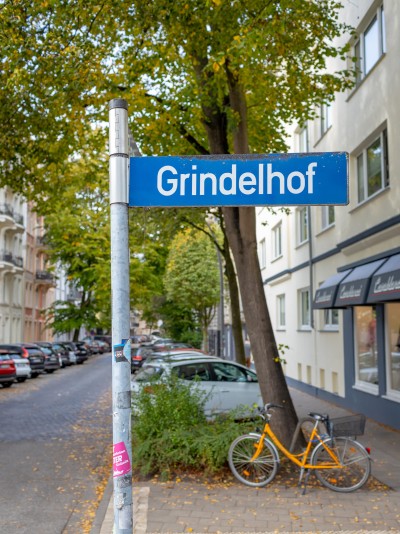
The Hamburg Stolperstein Initiative
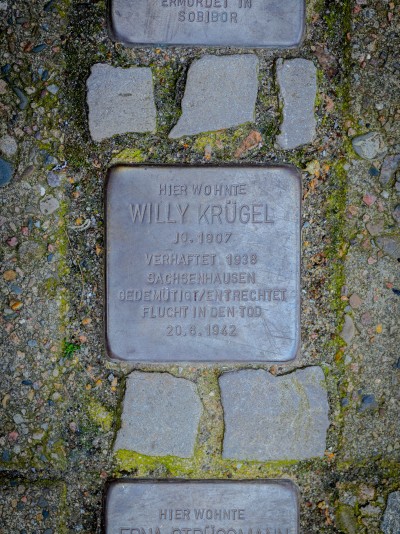
Behind every Stolperstein is the story of a person – and the work of many people dedicated to researching and preserving that story. For many years, volunteer researchers have been tracing the lives of the people commemorated by the stones. They work with historical documents, address books, archival records and other sources.
Their research focuses not only on the course of persecution, but also on the lives these people led before it began: their families, professions, education, friendships and everyday lives in Hamburg.
The resulting biographies are available in this database. They have also been published in several volumes, each dedicated to a particular district of Hamburg. These books are available from the Hamburg State Agency for Civic Education (Landeszentrale für politische Bildung). The life stories are also shared in person during neighbourhood walks, events and Stolperstein-laying ceremonies – keeping the memory of these people alive.
The Initiative places particular importance on maintaining contact with the relatives of those who were persecuted. This has led to the creation of an international network. Descendants from many countries travel to Hamburg to attend Stolperstein-laying ceremonies and visit the places where their ancestors once lived.

Researching Stolpersteine is one way to engage with Hamburg’s history and explore it for yourself.
There are many ways to get involved: you can contribute to research, write biographies, make contact with relatives, help with Stolperstein-laying ceremonies or take part in organising commemorative events. No previous experience is necessary. An interest in history, an openness to discovering new sources and a willingness to engage with someone’s life story are all you need to get started.
The initiative meets once a month at Kunstklinik Eppendorf. Whether you already have experience in historical research or are simply curious, everyone willing to help and anyone interested in remembrance culture is welcome.
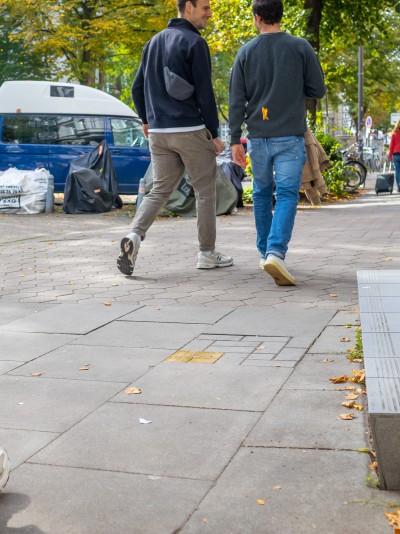
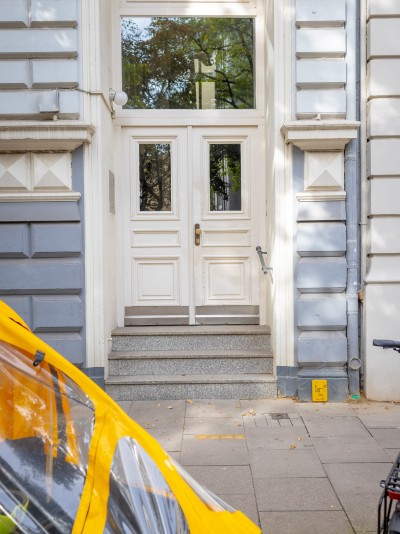
The history of National Socialism is not only the history of those who were persecuted. The people who supported the Nazi system, benefited from its rule, denounced others, went along with it or turned a blind eye were also part of society.
The database Those Involved brings this side of Hamburg’s history to light. It provides information about perpetrators, profiteers, informers, collaborators and bystanders. Looking at both databases reveals just how closely these different life stories were intertwined. Victims, members of the resistance and those who supported the Nazi regime often lived and worked in the very same streets and buildings.