

Robert Martin Levy
* 1891
HIER WOHNTE
ROBERT MARTIN LEVY
JG. 1891
EINGEWIESEN 1937
HEILANSTALT LANGENHORN
„VERLEGT“ 23.9.1940
BRANDENBURG
ERMORDET 23.9.1940
„AKTION T4“
Großneumarkt 56
Related Stolpersteine in Großneumarkt 56: Minna Levin | Jacob Hermannsen | David Hermannsen | Ruth Nathan | Elsa Nathan | Bernhard Weil | Rosa Therese Weil | Martha Minna Fernich | Helene Martha Fernich | Bertha Polack | Bertha Cohen | Eva Samuel | Hertha Liebermann | Josef Polack | Sella Cohen | Louisa(e) Elias | Theresia Elias | David Elias | Bela Neumann | Therese Neumann | Max Leo Neumann | Mirjam Neumann | Lieselotte Neumann | Fanny Neumann | Siegfried Neumann | Fritz Mainzer | Siegmund Josephi | Camilla Fuchs | Thekla Daltrop | Siegfried Weinberg | Rosa Weinberg

Großneumarkt 56
Robert Martin Levy, born on 1 Aug. 1891 in Hamburg, murdered on 23 Sept. 1940 in the Brandenburg/Havel “euthanasia” killing center
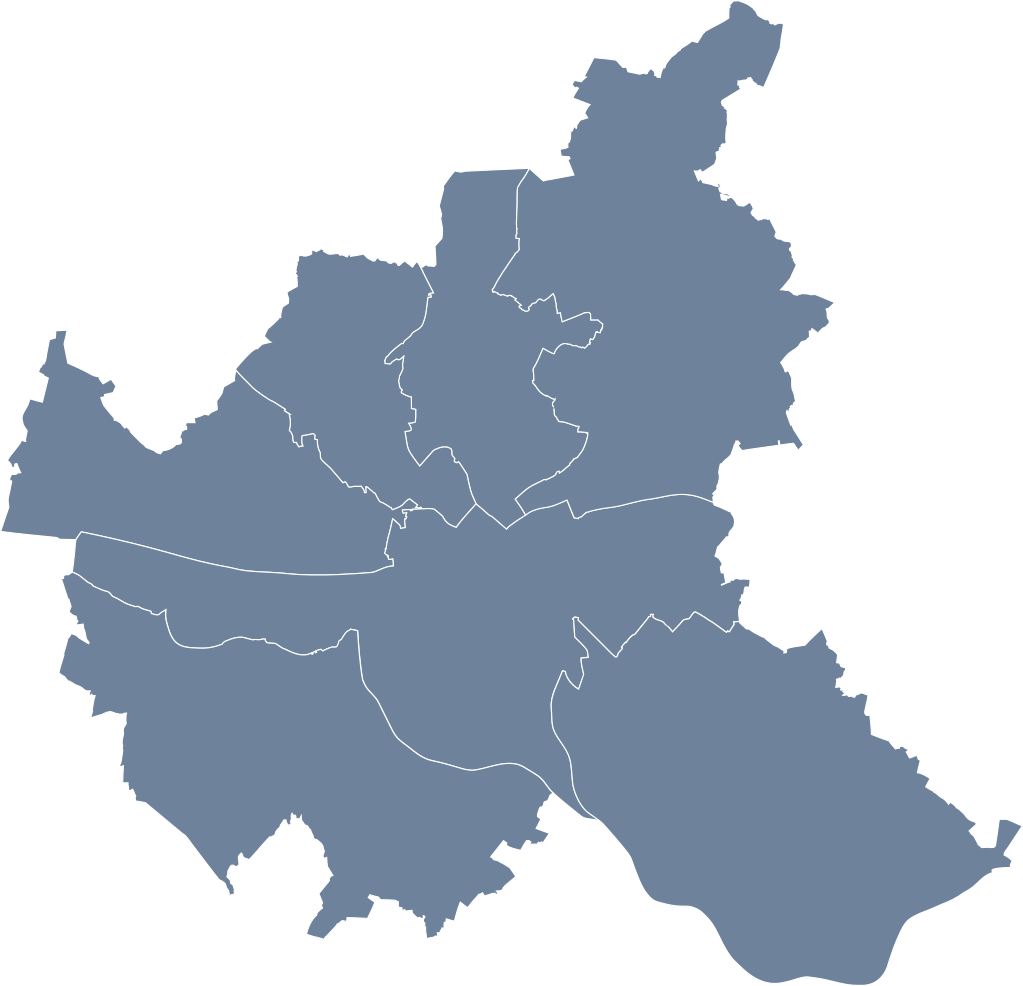
Stolperstein in Hamburg-Neustadt, at Grossneumarkt 56
Robert Martin Levy was born on 1 Aug. 1891 at Bei den Hütten 46 in the Neustadt quarter of Hamburg. His father Martin Levy, born on 7 Nov. 1864 in Hamburg, and his mother Rosa, née Cohn, born on 30 June 1862 in Altona, had married on 19 Dec. 1889. The couple was of the Jewish faith. Besides Robert Martin, he had two other sons: Louis, born on 23 July 1890, died on 24 Feb. 1891; and Bernhard, born on 6 Apr. 1893.
In about 1890, Martin Levy worked as a domestic servant, later as a butter dealer. His wife Rosa died on 17 Oct. 1904 in the Israelite Hospital in Hamburg. In July 1905, Martin Levy entered into a marital union with Therese Wagener, born on 22 July 1875. At that time, he lived at Grossneumarkt 56.
Robert Martin was 13 years old when he lost his mother. He had problems following lessons as a student. During puberty he tended, as the patient file says, to engage in “compulsive sexual acts,” which in 1906 – he was fifteen years old then – led to his admission to the “Friedrichsberg lunatic asylum” (“Irrenanstalt Friedrichsberg”). There he worked diligently and willingly as an apprentice painter. Occasionally, he is said to have been quarrelsome. Overall, Robert developed so favorably that he regularly received leaves to the city from 1921 onward.
The hereditary health policy that became a state doctrine when the Nazis assumed power in 1933 had serious consequences for Robert Martin. The “Law for the Prevention of Offspring with Hereditary Diseases” (“Gesetz zur Verhütung erbkranken Nachwuchses”), passed on 14 July 1933 and coming into force on 1 Jan. 1934, made it possible to “make infertile” (sterilize) by surgical procedure anyone “who is congenitally ill if, according to the findings of medical science, it is highly probable that his offspring will suffer from severe physical or mental hereditary defects.” When Robert Martin was admitted to Friedrichsberg, it was noted that his mother was “not normal, her father had died in a lunatic asylum.” That was enough to sterilize him at the Barmbek General Hospital on 7 Mar. 1935. After this operation, Robert Martin Levy was discharged, but in the spring of 1936, he again became a patient of the Friedrichsberg institution. The reason for this is not known. Two years later, on 13 July 1937, Robert Martin Levy was transferred to the Langenhorn State Hospital (Staatskrankenanstalt Langenhorn) “in a collective transport.” When he was admitted, he was able to answer knowledge-based questions logically and correctly. He also worked there in the painting workshops. He was described as quiet, diligent, and intelligent, so that he was also allowed to go on a regular leaves to the city while in Langenhorn.
Probably the assessments as a diligent and intelligent worker led to Robert Martin’s transfer to the Düssin Estate on 18 Aug. 1939. The City of Hamburg had bought the later subcamp of the Neuengamme concentration camp at the end of 1938. It temporarily accommodated 220 persons with a mental disabilities or mental illnesses. Initially planned, the establishment of a large institution for people with mental disabilities or mental illnesses was not realized. Like the other women and men from Langenhorn, Robert Martin Levy and two women and four men of Jewish descent in Düssin were involved in agricultural work.
The return of Jewish patients from Düsseldorf to Langenhorn was part of a wide-ranging campaign against Jews in public and private “sanatoriums and nursing homes” prepared by the planning and administration center for the Nazi patient murders at Berlin’s Tiergartenstrasse 4 and the Reich Ministry of the Interior since the spring/summer of 1940. It had the Jewish persons living in the institutions registered and moved together in what were officially so-called collection institutions. The Hamburg-Langenhorn “sanatorium and nursing home” (“Heil- und Pflegeanstalt” Hamburg-Langenhorn) was designated the North German collection institution. All institutions in Hamburg, Schleswig-Holstein, and Mecklenburg were ordered to move the Jews living in their facilities there by 18 Sept. 1940.
Robert Martin Levy arrived in Langenhorn on 14 Sept. 1940. After all Jewish patients from the North German institutions had arrived in Langenhorn, they were taken to Brandenburg/Havel on 23 Sept. 1940, together with the Jewish patients who had lived there for some time. On the same day, they were killed with carbon monoxide in the part of the former penitentiary converted into a gas-killing facility. Only one patient, Ilse Herta Zachmann, escaped this fate at first (see corresponding entry).
It is not known whether and, if so, when relatives became aware of Robert Martin Levy’s death. On his birth register entry, it was noted that the records office Chelm II registered his death under number 574/1940. In all documented death notices, it was claimed that the person concerned had died in Chelm (Polish) or Cholm (German). Those murdered in Brandenburg, however, were never in Chelm/Cholm, a town east of Lublin. The former Polish sanatorium there no longer existed after SS units had murdered almost all patients on 12 Jan. 1940. Also, there was no German records office in Chelm. Its fabrication and the use of postdated dates of death served to disguise the killing operation and at the same time enabled the authorities to claim higher care expenses for periods extended accordingly.
Robert Martin Levy’s father passed away on 28 May 1941 in the hospital at Johnsallee 68. His second wife Therese had already died on 11 Feb. 1939. Bernhard, the youngest of the three Levy brothers, was married to the Protestant Martha Drögmöller. This marriage to a non-Jewish woman saved his life. Initially protected from deportation, starting in Apr. 1940, he had to perform forced labor for five different companies and was compelled to wear the “Jews’ star” on his clothes. On 14 Feb. 1945, he eventually belonged to the last group of Jewish persons in “mixed marriages” (“Mischehen”) still existing who were deported to Theresienstadt. On 5 May 1945, the SS handed over responsibility for Theresienstadt to the International Committee of the Red Cross. The Red Army reached the ghetto on 8 May 1945. Bernhard Levy was one of the survivors. He returned to Hamburg and died on 2 Jan. 1963 in his hometown.
In commemoration of Robert Martin Levy, a Stolperstein is located on the sidewalk at Grossneumarkt 56 in Hamburg-Neustadt.
Translator: Erwin Fink
Kindly supported by the Hermann Reemtsma Stiftung, Hamburg.