

Theodor Haubach
* 1896
HIER WOHNTE
THEODOR HAUBACH
JG. 1896
1934-36 KZ BÖRGERMOOR
1944 HAFT IN BERLIN
HINGERICHTET
23.1.1945
Hartwicusstraße 2
Related Stolpersteine in Hartwicusstraße 2: Noemi Carola Sello
© Archiv "Enge Zeit" (S. 57)
Erzählerin: Christine Jensen Sprecher: Viktor Hacker Biografie: Carmen Smiatacz
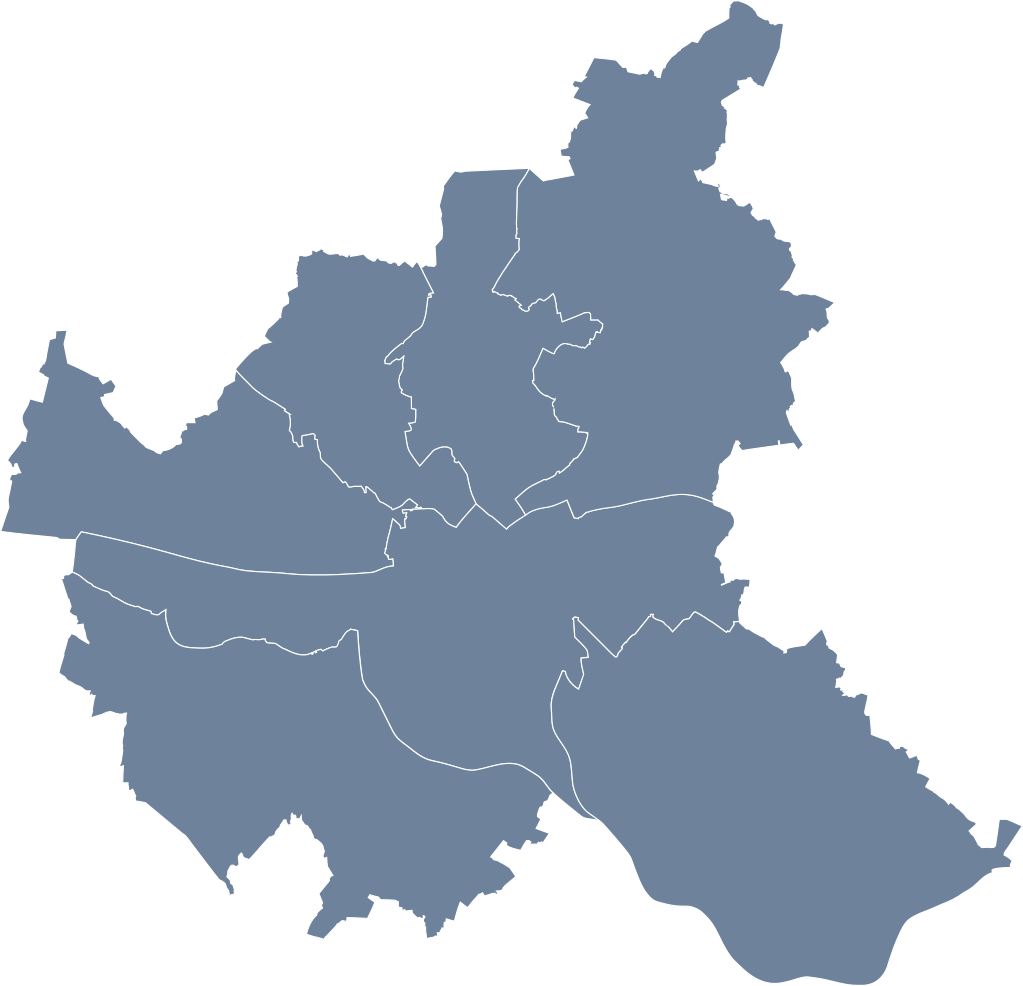

Hartwicusstraße 2
Theodor Haubach, born on 15 Sept. 1896, executed in Berlin-Plötzensee on 23 Jan. 1945
Hartwicusstrasse 2
Theodor Haubach’s father, a wholesaler, died one year after the birth of his son. For this reason, Theodor’s mother, who was Jewish, moved with him from Frankfurt/Main to Kiesstrasse in Darmstadt. A guardian enabled him to attend high school (Gymnasium). Since 1906, therefore, Theodor Haubach went to the Ludwig-Georg-Gymnasium in Darmstadt, where he met Carlo Mierendorff, with whom he would be close friends for his entire life.
Theodor Haubach was one of the last students of his age bracket to attend school for 12 years, until 1914, before completing the expedited high-school leaving exam for conscripted youths (Notabitur). Afterward, he volunteered for military service. In 1918, he was promoted to second lieutenant. However, he was wounded several times in the course of the war, sustaining a serious injury before the end of the war. Because of a bullet to the shoulder, pieces of uniform got into his wound that had to be removed by surgery. Also in connection with this injury, the prominent scars on his chin came about, attributable to cuts he had sustained.
After the war ended, he initially returned to Darmstadt. To Theodor Haubach, the end of the First World War constituted the collapse of an old epoch and at the same time the beginning of a new German and European era. For this reason, his interest in politics grew, particularly in Social Democracy.
In 1920, he became commanding officer of the defense forces in Darmstadt opposing the so-called Kapp Putsch. Moreover, since 1919, he studied philosophy, sociology, and political science in Heidelberg. Four years later, he wrote his dissertation in philosophy with Prof. Karl Jaspers [a prominent scholar]. During this time, he headed, together with his friend Carlo Mierendorff, the Social Democratic students’ movement. Consequently, this period saw initial confrontations with the Nazi milieu, in which both students and professors became involved. Even then, Theodor Haubach enjoyed a reputation of being a talented orator.
After completing his university studies, Theodor Haubach moved to Hamburg to work for the “Foreign Policy Institute” (Institut für Außenpolitik). One year later, in 1924, he started work as a foreign affairs editor of the Hamburger Echo, a Social Democratic daily newspaper. He kept this position until 1929. At the same time, he joined the leadership of the “Black, Red, and Gold Banner of the Reich” (“Reichsbanner Schwarz-Rot-Gold”), a Social Democratic paramilitary association dedicated to the defense of the democratic constitutional order in the Weimar Republic. Furthermore, its members viewed themselves as a counterweight to the National and National Socialist paramilitary units, which were showing a stronger presence all the time.
Theodor Haubach did not reside by himself in his Hamburg apartment at Hartwicusstrasse 2. His mother moved in with him and lived with her son until her death in 1939. She took care of the household while he devoted all his energy to politics. As a result, he gained a reputation as an old bachelor.
In his Hamburg years, Theodor Haubach was frequently on stage during large-scale democratic events. In 1927, he was elected member to the Hamburg City Parliament for the SPD (German Social Democratic Party). Two years later, his time in Hamburg ended, as he became chief press officer with the Reich Ministry of the Interior and then with the Berlin Chief of Police. One of Theodor Haubach’s goals was to strengthen and promote the democratic currents within the Berlin police force. Moreover, in 1932, he assumed the political editorship of the Reichsbanner, a newspaper close to the SPD.
After Franz von Papen’s coup d’état on 20 July 1932, Theodor Haubach was dismissed from the civil service like many others. After this, he concentrated on his work in the “Banner of the Reich,” continued illegally from 1933 onward. In the struggle against National Socialism, members of the “Banner of the Reich” gathered regularly in secret meetings, recruited new active members, and disseminated political writings as well as information materials. Because of this work, Theodor Haubach was arrested for the first time in 1933, though he was released after a short time. One year later, however, on 24 Nov. 1934, he was arrested again. This time, the detention was to last longer. Until 1936, he was initially imprisoned in the Columbiahaus concentration camp and subsequently in the Esterwege concentration camp near Papenburg in the Emsland. There he and the other prisoners had to perform forced labor draining the Börgermoor peat bog. After his release in 1936, one could tell the signs of imprisonment by looking at him – he looked significantly older.
Theodor Haubach found his first job after being imprisoned as a sales and insurance agent. Afterward, he got a position as an employee of his friend Viktor Bausch in the latter’s Felix Schoeller&Bausch Paper Company. This work also served to re-establish contact with old Social Democrats and union members. Moreover, in 1938, Carlo Mierendorff was released from concentration camp after five years of imprisonment. In 1939, Theodor Haubach was briefly detained once more, on charges of espionage for Czechoslovakia.
In 1940, when the “Kreisau Circle” (“Kreisauer Kreis”) took shape as a resistance group against the Nazi regime, Theodor Haubach, too, joined it. Carlo Mierendorff had already maintained contact to the resistance group around Helmuth James Count (Graf) von Moltke for some time, now introducing Theodor Haubach into the circle as well. He took part in a meeting for the first time on 18 to 20 Oct. 1942. The aim of this resistance group was geared toward an intellectual, political, and social reorganization of Germany after the end of the dictatorship. One of their demands was, “Never again war – never again Fascism!”
Starting in 1943, the “Kreisau Circle” also turned toward other resistance groups in order to participate in an active conspiracy against National Socialism. Thus, the members came in contact with Count (Graf) von Stauffenberg and Carl Friedrich Goerdeler. After the attempt on Hitler’s life on 20 July 1944, many persons involved in Berlin were arrested immediately. Theodor Haubach was still staying in Oberstdorf in the Allgäu then. Although he knew how dangerous it was for him to go back to Berlin, he returned there in early August. Carlo Mierendorff was no longer alive by that time. An aerial bomb had killed him in Leipzig on 4 Dec. 1943.
In the morning of 9 Aug. 1944, Theodor Haubach was arrested by the Gestapo in his apartment at Falterweg 1 in Berlin. He was taken to the Security Police School in Drögen near Ravensbrück, and he was then transferred to the Berlin prison on Lehrter Strasse. Shortly before his arrest, Theodor Haubach had met the singer Anneliese Schellhase, who would become the love of his life. Theodor Haubach’s long-standing friend, Alma de l’Aigle, wrote in the preface to a publication of some letters by Haubach to Anneliese Schellhase:
“It is like a miracle, like a very special grace at work despite all of the misfortune in his life that, not long before the violent end of his life, he had the privilege of meeting the love of his life, an event that also would have led to a union late in life, had not death violently struck in between them. He had known Anneliese Schellhase even before his arrest. The austere, boyish appearance, the classic face, and the lively mind of the young singer had soon attracted him. However, the great miracle of two souls encountering each other did not take place until Haubach sat in the prison cell on Lehrter Strasse.”
From prison, Theodor Haubach wrote letters to Anneliese Schellhase, drawing her from Partenkirchen to Berlin. After their engagement, she was permitted to visit him on a regular basis and to get everyday essentials for him. Nothing could deter Anneliese Schellhase from visiting her fiancé in prison. Even when she was seriously injured during an air raid and had difficulties walking, she visited him regularly. The couple celebrated their last Christmas together in the prison on Lehrter Strasse. The SS-Untersturmführer (an SS rank equivalent to second lieutenant) Knuth had put his room at their disposal.
In the prison on Lehrter Strasse, Theodor Haubach wrote his last letter to Anneliese Schellhase on 6 Jan. 1945, before his sentence was pronounced: “My Love, Beloved! We do want to see things right. Either God, in His grace and mercy, allows for everything to go off well – then even Dr. W. [The person actually meant was Roland Freisler, who was often dubbed the Vyshinsky/Wyschinski of the Nazi regime in reference to the Soviet public prosecutor during the Stalinist purges] will not do any harm – or he does not allow for it, in which case all of the gods will not help either …
Wherever Germany was in dire straits, I was there as well throughout. The sirs will not encounter a faint-hearted and despondent defendant. Perhaps they will even be surprised. Last year around the same time, I stood on many a burning roof in Berlin, and today I am supposed to justify myself as to whether I am a nationally committed man.”
The trials after 20 July 1944 were presided over by the Judge President of the “People’s Court” (“Volksgerichtshof”), Roland Freisler. To him, the death sentence was certain even before the trial. During the trials, cameras and tape recorders were operating. Theodor Haubach appeared serious and composed. His head slightly tilted backwards and gazing into the distance, he sat before the judge. Since he had already taken ill with acute bilious colic in prison, he collapsed during the trial and had to be carried out of the courtroom. As a result, his trial was separated from the others. On 15 Jan. 1945, the seriously ill man was sentenced to death for high treason and treason against the nation. Anneliese Schellhase submitted two pleas for clemency. She even succeeded in getting as far as Roland Freisler in person to dissuade him from the death sentence. However, all hopes were shattered by Theodor Haubach’s execution at Plötzensee prison on 23 Jan. 1945.
Several days before the execution, the prisoners, including Theodor Haubach, were taken to the death cell. Due to his gallbladder condition, Theodor Haubach had to be carried to the gallows on 23 Jan. Then he too was hanged, like his fellow prisoners.
Today, there are two schools in Germany named after Theodor Haubach. One is located in Berlin-Charlottenburg, the other in Hamburg-Altona. Moreover, in Berlin-Charlottenburg, Hamburg, Frankfurt/Main, Bielefeld, and Lüneburg streets have his name. In Berlin, the briefing room in the press and information office of German Federal Government also bears his name.
Translator: Erwin Fink
Kindly supported by the Hermann Reemtsma Stiftung, Hamburg.