

Mary Liebreich
* 1882
HIER WOHNTE
MARY LIEBREICH
JG. 1882
DEPORTIERT 1941
ERMORDET IN
RIGA
Grindelhof 83
Related Stolpersteine in Grindelhof 83: Werner Seidner | Erna Seidner | Rosa Kempler | Heinrich Kempler | Bertha Nürenberg | Tana Lesheim | Marion Lesheim | Ruth Lesheim | Bert(h)a Lesheim | Herbert Lesheim | Leopold Bielefeld | Hugo Moses | Kurt Ehrenberg | Valentina Brociner | Erna Brociner
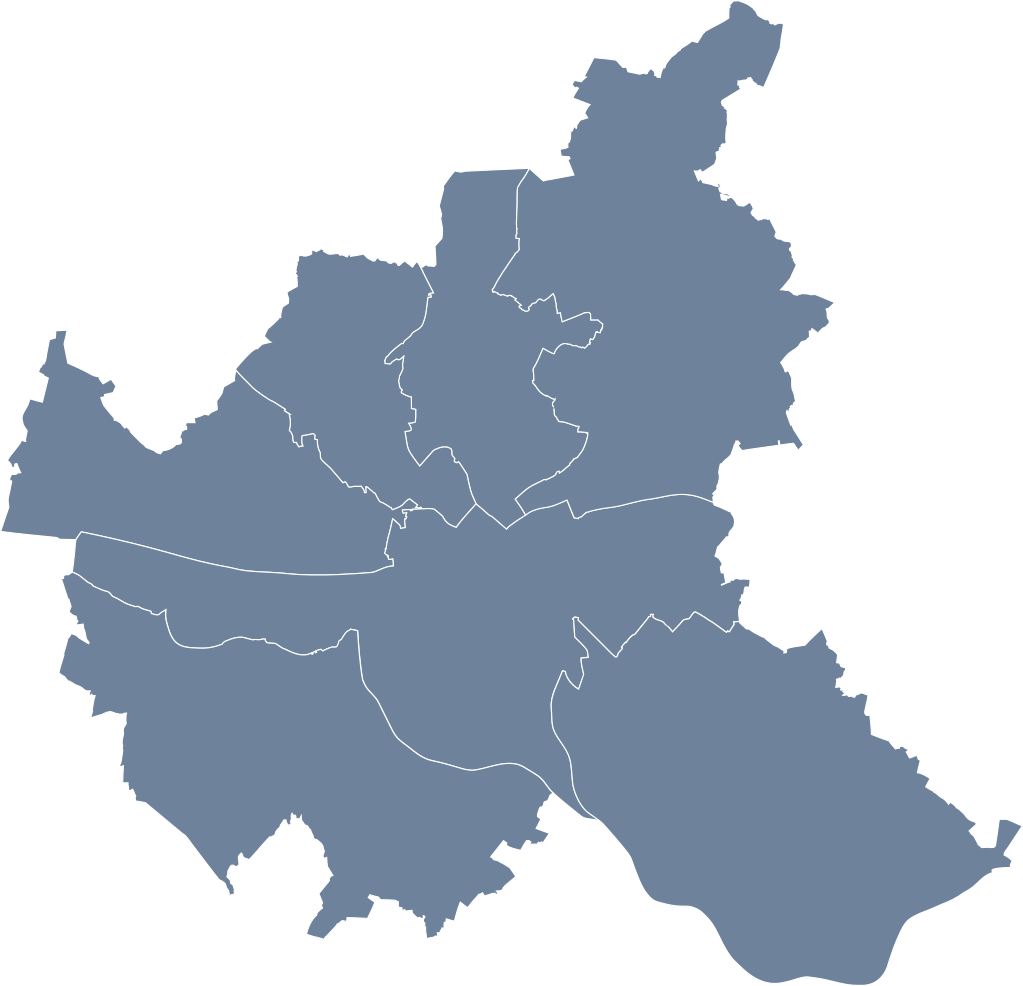

Grindelhof 83
Mary Liebreich, born on 26 Mar. 1882 in Hamburg, deported on 6 Dec. 1941 to Riga
Grindelhof 83
A native of Hamburg, the 35-year-old widow Julie Gumpel, née Beer (1845–1907), daughter of the butcher Beer Mendel Beer, married the Bavarian butcher and poultry dealer Schmay, called “Siegfried,” Liebreich (1855–1930) in 1880; even before 1880, both lived on Peterstrasse (in Hamburg-Neustadt) in the adjacent houses numbered 5 and 7. The witnesses to the marriage, the merchant Hirsch Mendel Beer (born in 1822) residing at Peterstrasse 18 and the bookbinder Abraham Jacobsohn (born in 1804) residing at Peterstrasse 7, also lived in the neighborhood and were members of the Jewish Community. In 1882, daughter Mary was born at Peterstrasse 7 and in 1884, son Ely at Peterstrasse 5. Between 1891 and 1902, the residential and business addresses of the Liebreich family in Hamburg-Neustadt changed on average every two years. From 1903 to 1908, the address was Wexstrasse 21. Julie’s first marriage to the butcher Gottschalk Abraham Gumpel (1838–1879) produced the children Adolf (born in 1867), Olga (born in 1868), Rosa (born in 1870), Betty (born in 1871), and Siegfried (born in 1873).
One year after the death of her mother (in 1907), the unmarried Mary Liebreich moved together with her father to Grindelhof 83, house no. 10. The entry in the Hamburg directory indicated “Siegfried Liebreich, Schiffskoch [ship’s cook], Grindelhof 83 Hs. 10.” Grindelhof 81-83, also known as “Grindelhof-Allee” in Hamburg’s directory, was a residential complex for workers designed by the architect A. Heidtmann in 1892/93. After the death of her father Siegfried Liebreich (1930), buried at the Jewish Cemetery in Hamburg-Ohlsdorf like his wife, Mary appeared in the directory as the main tenant of the apartment starting in 1931. From 1934 onward, the Hamburg German-Israelitic Community had her on file as an independent member. On her file card, the trade indicated was “head of a sewing room” (“Nähstubenleiterin”), but for the years 1935 and 1936, “unemployed” was entered and no contribution was assessed. From 1940, she got a monthly pension of 38.80 RM (reichsmark), and in Jan. 1941, she received welfare assistance in addition. From 1934 to 1941, she was listed as residing at Bornstrasse 22 (Rotherbaum), and there is no indication of an occupation. Bornstrasse 22 was the location of the Louis-Levy-Stift, which offered affordable housing to needy Jews. The Nazis included the residential home as a “Jews’ house” (“Judenhaus”) in their preparations toward the deportation.
Mary Liebreich was deported from Hamburg to the Jungfernhof subcamp of the Riga Ghetto on 6 Dec. 1941. It was located six kilometers (nearly 4 miles) from Riga and consisted of a dilapidated manor house surrounded by dwellings, wooden barns, and cattle sheds. On 26 Mar. 1942, 1,700 to 1,800 German Jews from the subcamp were shot dead in the nearby forest during “Operation Dünamünde” (“Aktion Dünamünde”). Whether Mary Liebreich was among the victims of this operation is not known, as is her date of death.
Mary Liebreich’s brother Siegfried Gumpel (born on 27 Feb. 1873 in Hamburg; see Stolpersteine in Hamburg-St. Pauli and www.stolpersteine-hamburg.de) first appeared in the Hamburg directory in 1901 under “S. Liebreich jr, Kfm. [merchant], Niedernstrasse 99,” although he only officially assumed the name of his stepfather in 1904. He married Mathilde Bähr, with whom he had a daughter (Maria Leiser, née Liebreich, 1897–1941). From 1902 to 1909, the family lived at Wilhelminenstrasse 74 and from 1910 at Wilhelminenstrasse 24 (later renamed Hein-Hoyer-Strasse) in the St. Pauli quarter. For the period from 1910 to 1920, he was entered as a photographer; before that his profession had been indicated as that of a merchant; afterward as that of a commercial agent. Siegfried Liebreich was taken into “protective custody” (“Schutzhaft”) in the Fuhlsbüttel concentration camp from 16 to 24 June 1938 as part of the “June Operation” (“Juniaktion”) and then transferred to the Sachsenhausen concentration camp, presumably because of a petty offense. He was released on 19 Sept.1938.
On 15 July 1942, Siegfried Liebreich was deported to the Theresienstadt Ghetto together with his sisters Rosa Stern, née Gumpel and Betty Worms, née Gumpel (see Stolpersteine in Hamburg-St. Pauli and www.stolpersteine-hamburg.de). All three died there: Siegfried on 10 Nov. 1942, Betty on 1 Dec. 1942, and Rosa on 9 Jan. 1943.
Mary’s brother Ely Liebreich (1884–1958) married Any Tauschwitz (1893–1963), a non-Jewish woman from Hamburg, in 1914; the spouses had two children. Ely Liebreich worked as an office clerk and since 1929, he was on file as an independent member of the Hamburg German-Israelitic Community. From 1920 to 1926, he was registered in the Hamburg directory as a commercial clerk and as having a residential address at Rosenallee 30 (Klosterthor); from 1927 to 1930, the profession indicated was department head, with the address unchanged. This was followed by moves to Strassburger Strasse 41/Dulsberg (1930–1932), Kroogblöcke 26/Horn (1933–1935), and Klosterallee 100/Hoheluft-Ost (1937–1941). His son Leopold Liebreich (born in 1914 or 1919) was arrested on 2 Nov. 1943, because charges had been pressed against him in Erfurt, alleging “racial defilement” (“Rassenschande”); he was deported to the Auschwitz concentration camp and later to the Buchenwald concentration camp. As late as 14 Feb. 1945, Ely and Any Liebreich were committed to the Theresienstadt Ghetto. They survived the ghetto and returned to Hamburg on 30 June 1945.
A Stolperstein was laid for Siegfried Liebreich at Hein-Hoyer-Strasse 24 (in the St. Pauli quarter). Betty Worms, née Gumpel, is commemorated by a Stolperstein at Hein-Hoyer-Strasse 63 and Rosa Stern, née Gumpel, has a Stolperstein dedicated to her at Klosterallee 100 (Hoheluft-Ost).
Translator: Erwin Fink
Kindly supported by the Hermann Reemtsma Stiftung, Hamburg.