

Heinrich Hellmund
* 1897
HIER WOHNTE
HEINRICH HELLMUND
JG. 1897
ENTRECHTET / GEDEMÜTIGT
FLUCHT 1933 SCHWEIZ
FLUCHT IN DEN TOD
SOMMER 1937
SALMAISE / FRANKREICH
Borgfelder Straße 51
© Gernot Sommer
Erzählerin: Christine Jensen Sprecher: Peter Bieringer & Oliver Rohrbeck

Borgfelder Straße 51
Heinrich Hellmund
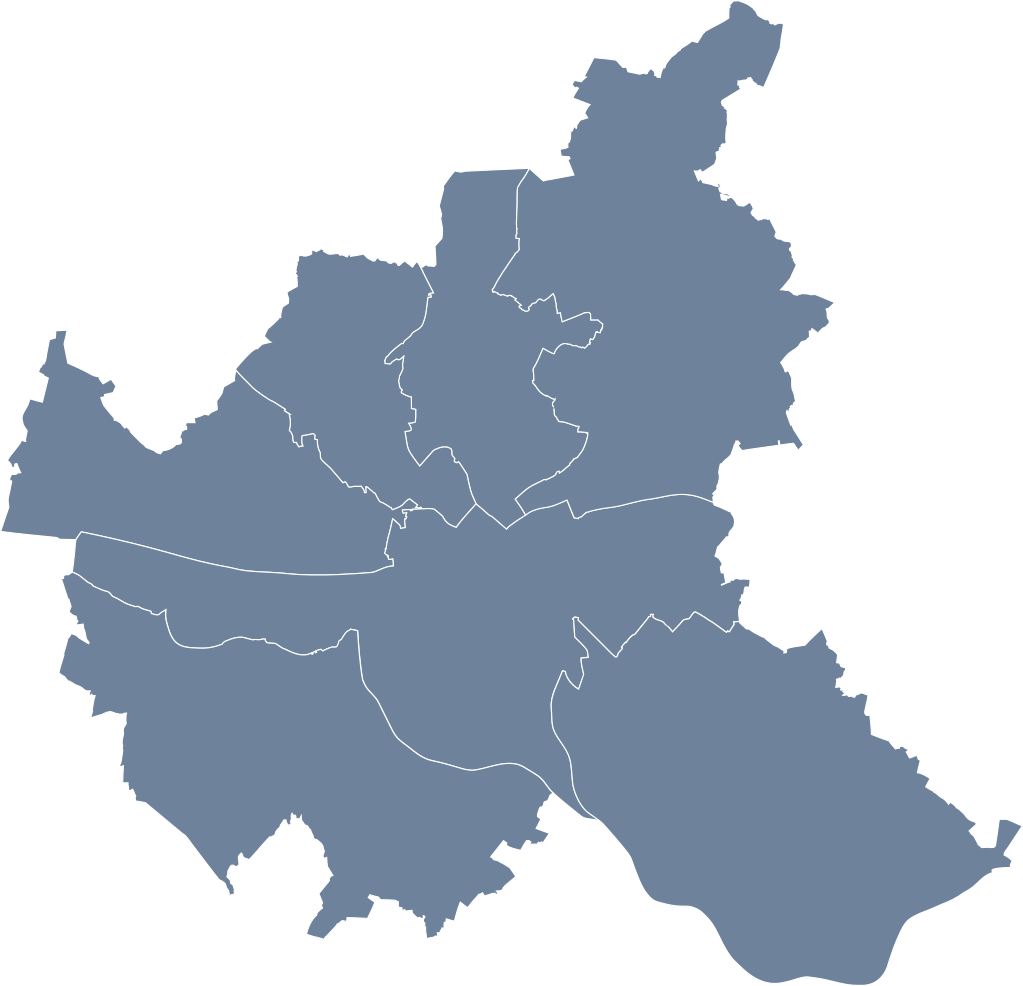
Borgfelder Strasse 51 (Hamburg-Mitte, Borgfelde)
The philosopher Heinrich Hellmund, born on 14 Feb. 1897 in Saarbrücken, is an author largely forgotten today. He committed suicide in July 1937, dying in the tiny village of Salmaise, about 25 kilometers (some 15 miles) northwest of Dijon.
On 28 May 1930, Hellmund was awarded his Ph.D. by the University of Giessen for his dissertation entitled Das Wesen der Welt (“The nature of the world”). The file concerning the conferring of his doctorate, available in the university archive (call number: Phil 0 18 1930), contains a number of handwritten letters by Hellmund, including a résumé. Passages of it read as follows:
“I was born in Saarbrücken in 1897 and lived with my parents in Munich from 1901 until 1927. There I completed the Realgymnasium [translator’s note: a high school focused on science, math, and modern languages] in 1916 and then served in the field for two years. In 1919, I registered at the University of Munich, taking courses for ten semesters until 1923. Even in high school, during my entire spare time I concerned myself with philosophy, which soon filled my life completely and became equivalent to it. In 1914, I began for the first time to set down my work and overall, I put it in writing four times. I was enabled to do so partly by the Notgemeinschaft der Deutschen Wissenschaft [Emergency Association of German Science], partly due to assistance by the publisher and contributions from private patrons. In 1927, my work entitled Das Wesen der Welt appeared in its first edition, in 1928 in its second edition (3 volumes, Deutsche Verlagsanstalt Stuttgart). The readers’ responses I received mostly from Northern Germany prompted me in 1928 to move to Hamburg, where I have been living for two years. In the summer semester of 1929, I registered at the local university. In addition, I was appointed an instructor at the Hamburg Community College [Volkshochschule].
The first conception of my work’s basic ideas dates to the years 1913–1914. Since then, I did not have to change them but rather expand them further all the time. I was influenced most significantly by Kant, Schopenhauer, and Nietzsche. However, it became apparent to me that other thinkers, such as, above all, Giordano Bruno and Spinoza, had anticipated in their thinking many ideas at which I had arrived on an independent path. A great clarity of perceiving and experiencing that distinguished my childhood rose and condensed in me into abstraction of an ever-increasing degree. Thinking is my only passion; it pervades me constantly. For many years after the war, I had very hard battles to fight with the unprecedented inauspiciousness of the times. However, the feeling of my inner vocation gave me the strength to tread forward on the chosen path.”
In Hamburg, Hellmund appears to have had closer contact to the philosophy professors Ernst Cassirer (emigrated to Britain in 1933) and the epistemologist August Messer, as emerges from a letter written on 12 Feb. 1930. In the letter, he asks to be admitted to doing his doctorate at the University of Giessen, even though he is not registered there:
“Work on my oeuvre had entailed such an amount of studies that mentally attendance of lectures was not conducive to providing me with anything essentially new, instead only imposing the strain of material to memorize. The Hamburg department chair Prof. Cassirer, whom I consulted on this matter, certainly showed utmost willingness to accommodate me, but at the same time, he explained that basically it was not possible to make any exemptions from the Hamburg regulations governing the conferring of doctorates (submission of a dissertation not published yet and adequate knowledge of classical Greek). Unfortunately, I do not see myself in a position to meet these two conditions.
Incidentally, this time coincided with Prof. Dr. August Messer looking into my work, something that yielded a very favorable result. I subsequently got in touch with Prof. Messer in writing and verbally, presenting to him my entire case. What emerged in this connection was that the conditions above were not part of the regulations governing the conferring of doctorates at the University of Giessen. Therefore, Prof. Messer stated conditions as fulfilled in my case to be able to do my doctorate at this university and thus to complete my external studies with the desired degree.
I thus ask, in recognition of these circumstances, to enable me to obtain my Ph.D. before the end of the current semester. I believe that both the number of semesters of which I can provide proof and the knowledge I actually acquired and particularly the independent scholarly research manifested in my work – which I request to have deemed as the doctoral thesis – would probably justify such a course.”
Nothing is known (yet) about the exact time of Heinrich Hellmund’s emigration, nor whether he returned to the Saarland anymore after 1933. Moreover, I have not yet succeeded in finding any police files about his suicide in France. What emerges from reports about scholarship recipients of the “Lincoln Foundation” is that he was among the earliest individuals sponsored.
I have available a very extensive (1,323 pages strong) one-volume edition of the work published in 1927, though not, as Hellmund mentioned, with DVA but, according to the imprint, with the Amalthea publishing house (Zurich, Leipzig, Vienna).
Translator: Erwin Fink
Kindly supported by the Hermann Reemtsma Stiftung, Hamburg.
Dr. Ralph Schock is literary editor with the Saarländische Rundfunk [broadcasting corporation] and author