

Bertha Beschütz
* 1850
HIER WOHNTE
BERTHA BESCHÜTZ
GEB. EICHHOLZ
JG. 1850
TOT AM 13.12.1941
IN HAMBURG
Husumer Straße 37
Related Stolpersteine in Husumer Straße 37: Olga Beschütz | Marie Beschütz | Clara Beschütz
© Privatbesitz
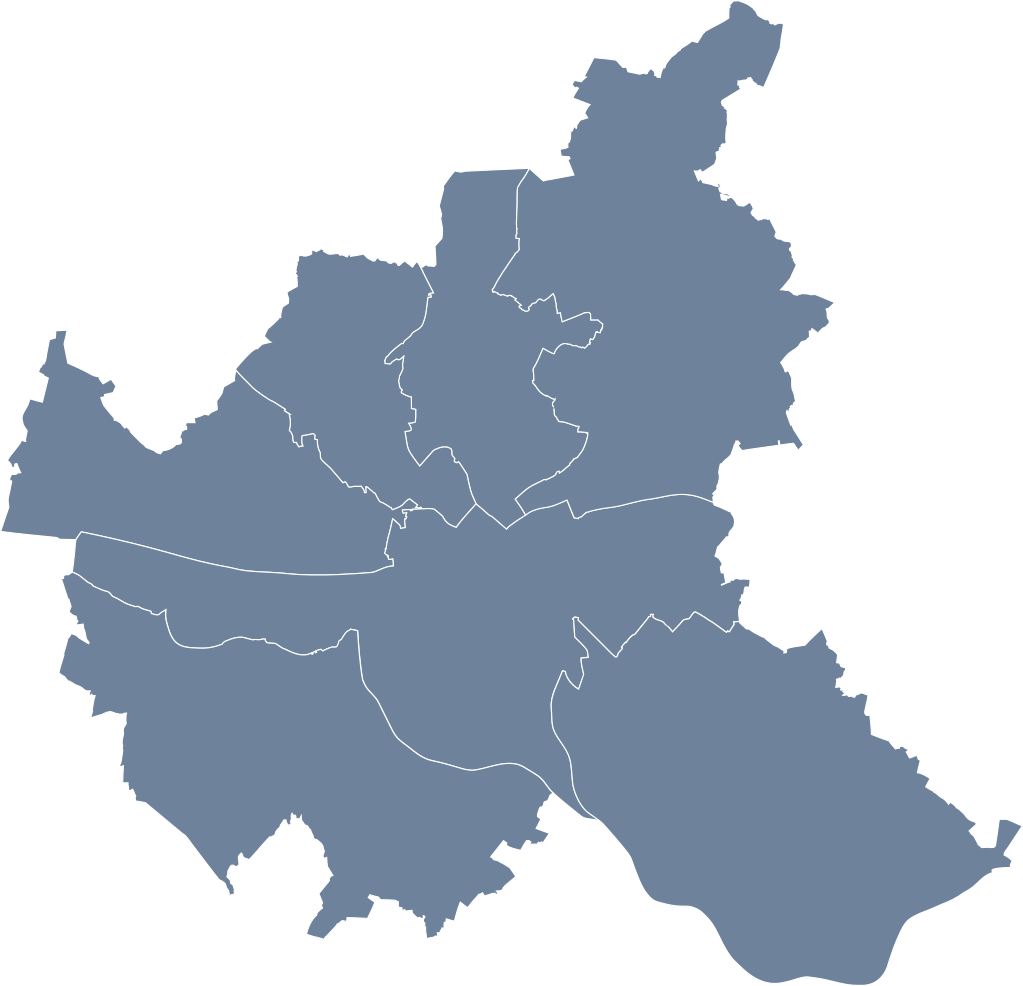

Husumer Straße 37
Bertha Beschütz, née Eichholz, born on 1 Mar. 1850, died on 13 Dec. 1941
Husumer Straße 37
“She was of small build and walked with a stoop. In keeping with the times, she was always dressed in black, wore a delicate necklace, and was friendly to everyone.” This is how grandson Gert Beschütz remembers his paternal grandmother, to whom he was connected with “great reciprocal love.” At the time of his birth, she was already 70 years old, living as a civil servant’s widow “properly and frugally” with her three unmarried daughters Olga, Clara, and Marie at Werderstraße 16 “in a dark, large apartment on the raised ground floor.”
Her husband, Dr. jur. Siegmund Beschütz, born in 1840, had himself baptized together with her on 11 Dec. 1880 at St. Johannis – Eppendorf Church by Pastor Dr. Hanne. Six days later, on 17 Dec. 1880, he baptized their children Olga, Clara, and Max. The christening of Marie, who was born on 11 Feb. 1882, took place on 29 Apr. 1882.
Siegmund Beschütz already died in 1912 of tabes dorsalis, leaving to his widow Bertha an unoccupied villa at Werderstraße 63 and a civil servant pension.
Gert Beschütz, who frequently saw and experienced his grandmother along with his three aunts during Sunday afternoon coffee at his patents’ place, spoke of her as “having the final say in the family.” Even his father reportedly had “great respect” for her. “If she looked sternly, even the strongest man put aside his spoon. And if she classified someone with ‘Well, he probably isn’t to our liking,’ that was like a death sentence.” In his overall assessment of her, he said, “She was what you consider a lady.”
In 1931, her grandson remembers, Bertha Beschütz and her daughters moved to a nice apartment at Hochallee 123. In 1939, they were already living at Husumer Straße 37, “quietly and modestly” and “completely terrified,” according to the grandson.
The files of the Chief Finance Administrator (Oberfinanzpräsident) reveal that Bertha Beschütz was forced to sell the property at Werderstraße 63 in 1939. She was asked to disclose her financial circumstances, though authorizing her daughter Marie to provide the necessary information on her behalf, since she said she was unable to appear in person due to her advanced age (89 years). The sum the property yielded was deposited in her account; however, approval by the Chief Finance Administrator was necessary to dispose of any of these funds.
On 28 May 1941, his twenty-first birthday, for which his maternal Aunt Helmi arranged a party, Gert Beschütz believes to have seen his grandmother and aunts together there for the last time. The stairs were “beginning to give” his grandmother, by then 91 years old, “trouble, and for the aunts it was already difficult to see other people. In their situation, you constantly felt under observation, and if they had been denounced because of such contacts, they and the friends visited would have had to reckon with serious problems.”
According to the notes by Gert Beschütz’ uncle Edgar Eichholz, when the deportation order for Olga, Clara, and Marie came in Dec. 1941, the 76-year-old pastor Heinrich Seyfarth, who had baptized Gert Beschütz, attempted to prevent the deportation by writing to Heinrich Himmler. In the letter, he pointed to the Christian upbringing of the sisters and to Olga’s and Marie’s reputations as former teachers. At least one of the daughters ought to be left to the very old Bertha Beschütz for support. The petition was turned down, and the daughters had to tell the truth to their physically somewhat frail mother, who had “still an iron will to live in order to allow her daughters to receive her comparatively high pension for as long as possible.” Apparently, she accepted the news calmly.
The plan was to take her to the Jewish senior citizens’ home; at the time, it was simply called nursing home. With her daughter Olga present and fully aware of the events, she took an overdose of sleep-inducing medication. The drug had been procured by Dr. Hans Gremler, a ship’s doctor whom Gert’s Aunt Trudel married as her second husband, to help her “to a peaceful death.” Bertha Beschütz, who soon thereafter fell asleep, was “transported” “on the very same evening in an ambulance to the Jewish Hospital,” then located at Johnsallee 68. Since the sleep-inducing drug was not given at a sufficient dose, poisoning by the medication did not set in immediately. Bertha Beschütz continued to live for another eight days.
Gert Beschütz wrote about the death of his grandmother:
“I visited her just one day before her death” – she died on 13 Dec. 1941 – “at the Jewish Hospital. There she lay quite peacefully, and when I took her hand, she muttered only a single word: ‘Helgoland.’ I was terribly sad.” Apparently, his grandmother had had a special connection to Helgoland; for in another passage he wrote that she had been bathed even as a baby with the red waters of Helgoland, considered having a particularly tonic effect.
Gert Beschütz reported that the burial of his grandmother was dreadful as well. Since due to “some stipulation” she was not allowed “to be interred in the Beschütz family grave,” her urn was buried on some pasture near Bramfeld.” Uncle Edgar, Aunt Helmi, and he attended the burial. He remembered the words of his uncle: “Never forget that we had to bury your grandmother hastily, like a dog!”
Translator: Erwin Fink
Kindly supported by the Hermann Reemtsma Stiftung, Hamburg.