

Bernhard Bästlein
* 1894
HIER WOHNTE
BERNHARD BÄSTLEIN
JG. 1894
ERMORDET 18.9.1944
ZUCHTHAUS
BRANDENBURG
Goldbekufer 19
Related Stolpersteine in Goldbekufer 19: Regina Mendelsohn
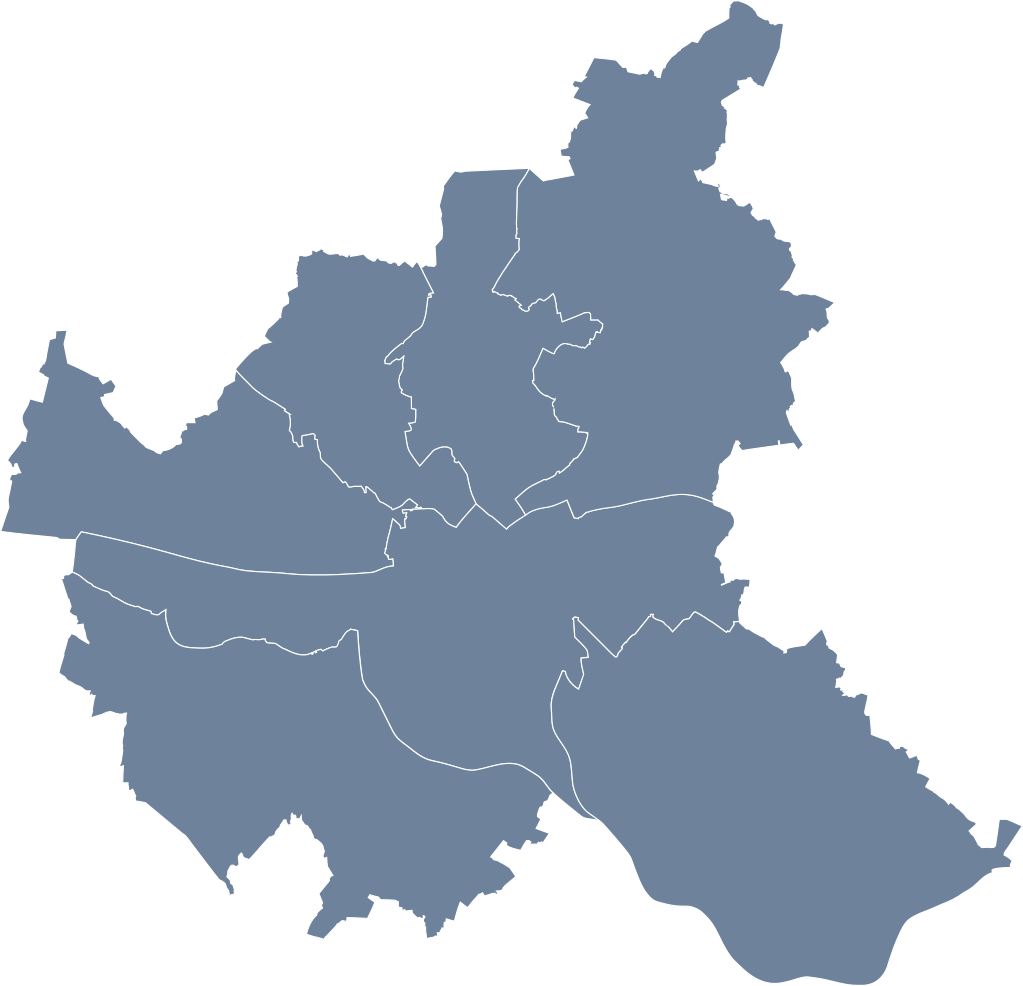

Goldbekufer 19
Bernhard Karl Bästlein, born on 3 Dec. 1894 in Hamburg, imprisoned almost without interruption from 1933 onward, executed on 18 Sept. 1944 in the Brandenburg-Görden penitentiary
His father, Bernhard Bästlein senior, came from an old family of Thuringian toy makers and gunsmiths and moved from Heinrichs near Suhl to Hamburg in 1885. He worked as a gunsmith and safe builder and was a member of the SPD and a committed labor unionist. His mother Cornelia came from the East Frisian Kock family of sailors and fishermen based in Leer. The parents got married in Hamburg and initially lived on Springeltwiete. Bernhard Bästlein junior was the fourth of five children. He grew up with his siblings near the Gänsemarkt, at Drehbahn 26.
After eight years of elementary school (Volksschule), he began a four-year apprenticeship as a precision mechanic. At the same time, he attended evening classes in the workers’ education program and at the community college (Volkshochschule).
As early as 1911, during his apprenticeship, Bernhard Bästlein joined the “Socialist Young Workers” (Sozialistischee Arbeiterjugend – SAJ), where he met the tailor Johanna Elisabeth Hermine Berta Zenk, born on 25 July 1895 in Hamburg, whom he married on 12 June 1920. She came from a Social Democratic working-class family. Her parents were Albert Zenk and Wilhelmine, née Schröder.
In 1912, Bernhard Bästlein joined the German Metalworkers’ Union (Deutscher Metallarbeiterverband – DMV) and the SPD. From 1913 onward, he worked as a precision mechanic for various armaments companies, before being conscripted into the army in June 1915. He was on the western front in 1916. In the summer of 1917, he used the pseudonym “Berne Bums” to write articles about the revolutionary development in Russia and argue in favor of peace and revolution. He chose the pseudonym because of his nickname, which he had received for the dialect expression “I’ll slap you in the face” (“Ich bums Di en”) he frequently used. During the retreat from the front, he was elected to the workers’ and soldiers’ council (see also entry for Adolf Biedermann) in Nov. 1918, which resulted in his discharge from the armed forces.
Unemployed at first, Bernhard Bästlein then got a job again as a precision mechanic and, in an honorary capacity, as a workers’ correspondent at the Hamburger Volkszeitung and the “Free Young Workers” (“Freie Arbeiterjugend”). In 1918, he left the SPD because of its consent to the war credits, changing to the Independent Social Democratic Party of Germany (Unabhängige Sozialdemokratische Partei Deutschlands – USPD), which had emerged in Apr. 1917 by splintering off the SPD. When in 1920 the left wing of the USPD united with the KPD, the Bästlein couple joined the KPD. Bernhard Bästlein was elected to the Hamburg city parliament in Mar. 1921. Urged by resolutions of the Communist International, the KPD unleashed riots in Saxony and in the Ruhr. In Hamburg, 23 Mar. 1921 saw calls for a general strike (“March Action”). Bernhard Bästlein participated in the protest march to the Blohm & Voss shipyards. Severe clashes with police ensued.
Since the participating deputies were charged with “preparation of high treason” and their immunity as people’s representatives was waived on 30 Mar. 1921, the KPD organized his escape by ship from Stettin (today’s Szczecin in Poland) to Leningrad (today’s St. Petersburg). In the Soviet Union, Bernhard Bästlein worked as an editor, copy editor, and teacher at the [Communist] German Party School in Moscow. His wife followed him from Hamburg. After the Party School was closed, he worked as a lathe operator at a Moscow factory. Only by engaging in black market transactions and “coal pinching,” did he and his wife have enough to subsist. In Dec. 1922, the couple participated in the IV World Congress of the Communist International.
Because of an amnesty, the Bästlein couple returned to Germany in Jan. 1923. Commissioned by the party, Bernhard Bästlein then worked as an editor for various newspapers in the Rhenish-Westphalian industrial region from 1923 to 1930. In 1928, the couple lived in Hagen and in 1930 in Düsseldorf. Bernhard Bästlein was put on trial at least three times for press offenses and once for preparation of high treason. Since he had substantial knowledge of political criminal law by then, he successfully defended himself before court. In Oct. 1929, Bernhard Bästlein became head of the KPD’s subdistrict in Düsseldorf, and in 1930, district head in Cologne. Since he received hardly any wages for his activities in those years, the couple had to live as subtenants with party comrades.
In 1924, their first child died shortly after birth.
From Feb. 1931 to Mar. 1933, Bernhard Bästlein was political secretary of the KPD’s Mittelrhein (Middle Rhine) District Administration, receiving sufficient pay for the first time. He was elected to sit in the Prussian Landtag in Apr. 1932. Johanna Bästlein was active in Communist work for the cause of women until 1932. Their son Bernt Henry Jürgen was born on 3 Dec. 1932. On 7 Feb. 1933, Bernhard Bästlein took part in the last illegal meeting of the KPD, chaired by Ernst Thälmann at the “Sporthaus Ziegenhals” near Berlin. On 5 Mar. 1933, he was elected to the Reichstag but was unable to accept the seat due to the incipient persecution.
When the KPD’s Cologne party office at Aquinostraße 11 was seized in 1933, Johanna Bästlein and their son had to clear the two-bedroom apartment there, which had been their home since 1931. Their library was confiscated. Johanna Bästlein put their household effects in storage with strangers, receiving none of it back later. She returned to Hamburg and lived on welfare assistance paid by the city of Cologne.
From Mar. 1933 onward, Bernhard Bästlein was in Frankfurt as an organizer of the illegal KPD in Frankfurt/Main and was arrested there in May 1933. The “People’s Court” (Volksgerichtshof) did not charge him until Dec. 1934 for high treason and treason against the nation. The court converted these charges into “preparation to high treason,” sentencing him to 20 months in prison. From 12 June 1933 to 12 Feb. 1935, he was in prison at the Siegburg penitentiary. Afterwards, he returned to his family in Hamburg, who lived at Strassburger Straße 33 then.
On 8 Mar. 1935, Bernhard Bästlein was taken into “protective custody” (“Schutzhaft”) again. He was charged as the intellectual initiator of a murder in Bonn. Although the legal proceedings were suspended, he was held at the Esterwegen concentration camp and – from 1936 – at the Sachsenhausen concentration camp. There he met Robert Abshagen, Franz Jacob (see corresponding entry), Julius Leber (SPD), Harry Naujoks, Wilhelm Guddorf, and Martin Weise. In 1937, he was among the authors of the “Sachsenhausen song” (“Sachsenhausenlied”), which came into being on the orders of the SS camp commandant Weiseborn as the camp song but was subsequently banned. In Apr. 1939, Bästlein was transferred to the “Klingelpütz” prison in Cologne, remaining in police custody until 6 Apr. 1940.
After his release, he returned to his family in Hamburg, living with them at Goldbekufer 19 from 10 Apr. 1940 onward. He worked as car cleaner, chauffeur, and then at the Altona-based Riepe Works, a producer of stylographs. Bernhard Bästlein met up with other released comrades from the Sachsenhausen concentration camp. They intended to continue the active resistance struggle against the Nazi regime. Thus, he joined Robert Abshagen, Franz Jacob, Oskar Reincke, and other Communists to build up a resistance organization. Their top priorities were political training of members, intelligence work, and production sabotage in the companies. A meeting in Nov. 1941 is regarded as the constituting session, at which Bernhard Bästlein was commissioned with preparing a concept. In Dec. 1941, Bernhard Bästlein, Robert Abshagen, Wilhelm Guddorf, Martin Weise, and Fritz Lange gathered in Berlin for consultations on the six-page document. Wilhelm Guddorf belonged to the KPD and maintained contact via Martin Weise to Berlin resistance groups, such as the Uhrig, and Schulze-Boysen/Harnack organizations (“Red Orchestra” [“Rote Kapelle”], see corresponding entry for John Rittmeister).
Bernhard Bästlein was responsible as a political leader for counterespionage, intelligence gathering, and supplying weapons. There were connections, often only very loose, to resistance circles in Hamburg, such as the local branch of the “White Rose” (see corresponding entry for Margaretha Rothe), the Etter-Hampel (see Werner Etter) and the KdF (“Kampf dem Faschismus” –“Fight Fascism”) (see Ladewig) groups, as well as to groups in other parts of Germany. The resistance activities concentrated largely on big companies in the area of “shipyards” and “metal,” in which over 30 illegal workplace cells existed. The resistance fighters supported prisoners of war and forced laborers, resulting in the establishment of contacts to foreign groups as well. Mid-1942 saw what was probably the only large-scale leaflet initiative. The “instruction leaflet for construction workers” (“Merkblatt für Bauarbeiter”) was addressed specifically to Hamburg construction workers who were dispatched by force to work on construction projects of the “Organization Todt” in Norway and the Soviet Union. It linked general sociopolitical demands (wage level, separation allowance) with the call for acts of sabotage as well as decent treatment of the local population, closing with the slogan “Hitler’s defeat is not our defeat but our victory!”
In mid-May 1942, four persons parachuted into East Prussia from Soviet planes. By using the radios and pieces of false ID they brought along, they were probably supposed to support the Schulze-Boysen/Harnack organization in Berlin. However, since they were unable to establish contact there, two of them, Erna Eifler and Wilhelm Fellendorf, set out for Hamburg to see Wilhelm Fellendorf’s mother. In early July, Erna Eifler and Wilhelm Fellendorf succeeded in establishing contact to the Bästlein organization, which then provided them with a hiding place and food supplies. Yet by that time, the Gestapo was on their trail. On 15 Oct. 1942, Hamburg saw the onset of a wave of arrests to which Oskar Reincke and Bernhard Bästlein fell victim as well on 17 Oct. An attempt by Bernhard Bästlein to escape failed because he was shot in the lower leg. After severe torture in the Hamburg Stadthaus, the Secret State Police headquarters, he attempted to commit suicide by hurling himself down a stairwell. He survived – and adhered to his stance of political resistance despite the further torture that followed. On 30 Nov. 1942, he made a written statement to the Gestapo, which now also integrated his experiences during Nazi rule. An excerpt reads, “The first factor was my seven-year imprisonment from 1933 to 1940 – four years of that in concentration camps – during which I experienced, witnessed, and heard of horrendous things. Those days deprived me of any possibility to have doubts regarding my ideological views, for my conviction that a social order in which the things I experienced are possible must be eliminated was thus put on firm foundations. The second factor was the Second World War started in 1939.”
In Aug. 1943, Bernhard Bästlein was transferred from pretrial detention at Fuhlsbüttel to the penitentiary in Berlin-Plötzensee to testify at the trial against Martin Weise. During an air raid on 30 January 1944, the Berlin prison received a direct hit. Bernhard Bästlein managed to flee and report about it in a letter to his wife. He found shelter with Berlin Communists and continued to be active in the resistance. In Apr. 1944, he happened to come across Franz Jacob in the subway. Together with Anton Saefkow, they became what was called the “triple head” (“Dreierkopf”) of the illegal KPD in Berlin. However, Bernhard Bästlein was arrested on 30 May 1944, interrogated at the Reich Main Security Office (Reichssicherheitshauptamt) in Berlin on Prinz-Albrecht-Straße, and tortured for days. In July, he was committed to the Sachsenhausen concentration camp. The sentence pronounced by the “People’s Court” (“Volksgerichtshof”) on 5 Sept. 1944 for preparation of high treason, aiding the enemy, and undermining military strength (“Wehrkraftzersetzung”) also applied to Franz Jacob and Anton Saefkow. A passage from the reasons for the judgment states, “You are obstinate and incorrigible.”
Bernhard Bästlein was guillotined at the Brandenburg-Görden penitentiary on 18 Sept. 1944.
After her welfare assistance had been cancelled, Johanna Bästlein worked as a uniform seamstress from 1938 onward. She was bombed out in July 1943, since then living in a primitive cottage with her son at Ziegelsee 60 in Jenfeld. In foresight, her husband had already converted the place into an emergency quarter. Upon losing her job, she did sewing work for private persons. She was arrested twice but released again due to lack of evidence. Johanna Bästlein learned about her husband’s death only on 30 Sept. 1944. She was prohibited from publishing an obituary.
Bernhard Bästlein’s urn was transported to Hamburg in 1946, laid out in state at Hamburg city hall for a week, and then buried at the Memorial Grove for Hamburg Resistance Fighters (Ehrenhain der Widerstandskämpfer) on Ohlsdorf Cemetery.
The GDR honored Bernhard Bästlein with, among others, monuments and streets named after him in Berlin and Rostock.
Translator: Erwin Fink
Kindly supported by the Hermann Reemtsma Stiftung, Hamburg.