

Adolph Meyer
* 1864
HIER WOHNTE
ADOLPH MEYER
JG. 1864
FLUCHT 1939 HOLLAND
INTERNIERT WESTERBORK
DEPORTIERT 1942
AUSCHWITZ
ERMORDET 15.10.1942
Eppendorfer Baum 44

Eppendorfer Baum 44
Adolph Meyer, born on 4 July 1864 in Altona, deported on 12 Oct. 1942 from Westerbork/ Netherlands to Auschwitz, murdered there on 15 Oct. 1942
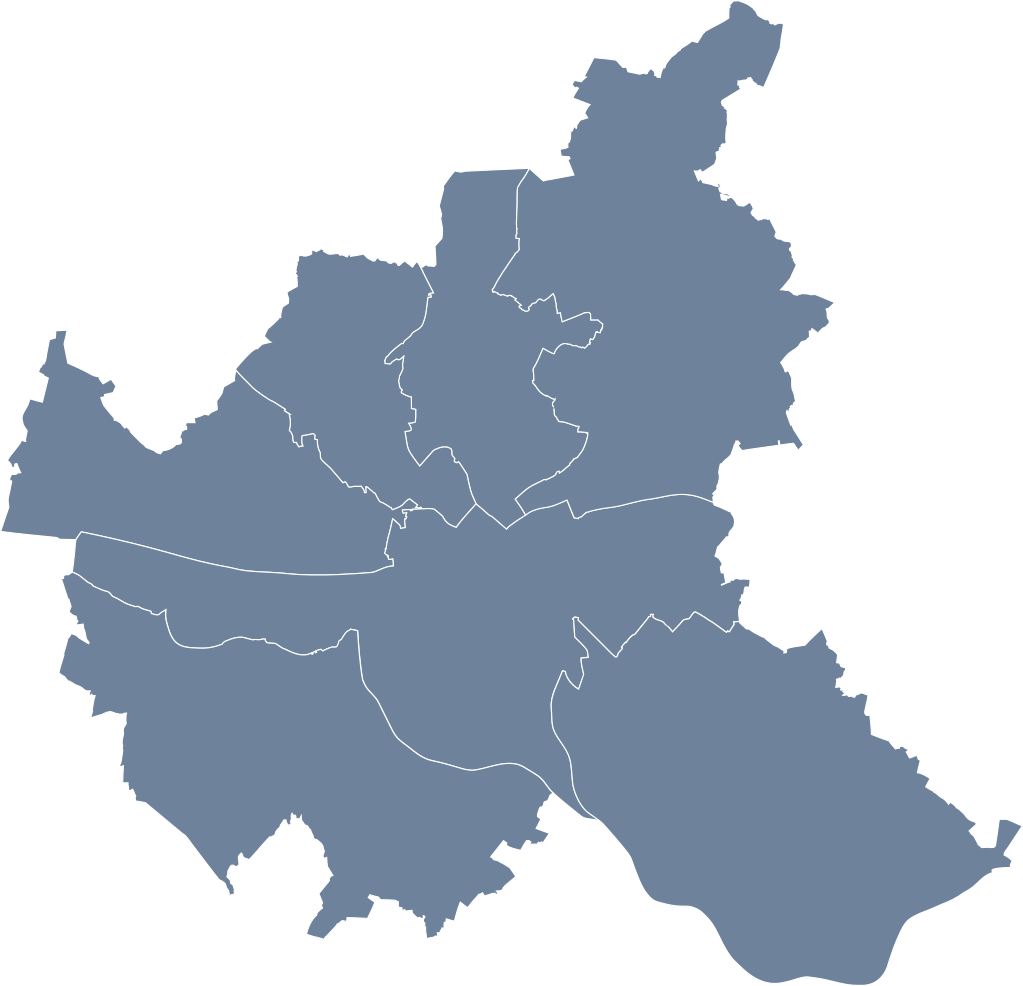
Eppendorfer Baum 44 (Eppendorf)
Adolph Meyer was born in 1864 in Altona as the second child of the trader Isaac Josel (Joseph) Meyer (1835-1911) and Riecke Meyer, née Bing (1837-1918). The parents had married in Altona in June 1862 by the High German Jewish Congregation in Altona. After the marriage Isaac Meyer moved to the parents-in-law Bing in the street Schlachterbuden 14, which was located directly on the border to Hamburg (St. Pauli) (today crossing of Lange Straße and Pinnasberg). In the house, which belonged to merchant Joseph A. Bing (born 1805), lived, in addition to two siblings of Riecke, two maids and a tenant - so a total of eleven people.
Before Adolph, Helene (born 1863 in Altona) had been born. After him, the siblings Bertha (born 1865 in Altona), John (born 1873 in Hamburg) and Gustav (born 1876 in Hamburg) were born. The new familymembers came at a time of upheaval. Altona belonged to the Duchy of Holstein, headed in personal union by the Danish king. Holstein was occupied by troops of the German Confederation in December 1863 and by Prussian and Austrian troops the following year. In January 1867, the Duchies of Holstein and Schleswig were declared a Prussian province. On February 10, 1869, the self-employed "men's wardrobe dealer" Isaac Meyer was issued the requested "Bürgererschein Classe 3", i.e. he was now citizen of the now Prussian city of Altona.
In 1870, the family moved to Hamburg, where Adolph Meyer visited school and then worked as a "Kommis” (commercial clerk). After two army physicals for the Imperial Army, the "clerk 1.7 meters in height,” as noted on the muster sheet, was exempted from military service (presumably permanently) in 1885 because of his myopia.
His brother John Meyer (1873-1925), on the other hand, was required to do his military service after graduating from high school in 1891 and completing a commercial apprenticeship, and in 1897 was listed as Landsturm I, a military reserve of older cohorts of those required to serve in the military. From 1895 to 1897 John stayed in Antwerp, in 1900 he traveled to Russia on business (as had his brother Gustav two years earlier) and in 1908 founded his own company in Hamburg. The fact that he was assigned to the infantry in 1915 indicates a wartime assignment.
The parents Isaac and Riecke Meyer lived with their children in the streets Schlachterbuden 14/ Altona (a.o. 1864-1869), then in the nearby 2. Bernhardstraße 27/ St. Pauli (a.o. 1873-1880), Zeughausmarkt 42/ Neustadt (a.o. 1882-1883), where the clothing store L. Meyer & Co. was also located from 1882 to 1884, Wilhelminenstrasse 63 (1888-1897), and Grindelallee 84 (1897-1900) renamed Grindelallee 139 (1900-1903) and Hartungstrasse 22/ Rotherbaum (1904-1911).
In 1892, he went into business for himself and registered the Adolph J. Meyer Grain Agency in the Hamburg Company Register; from 1904 to 1908 his brother John Meyer was also a co-owner of the company. In the trade section of the Hamburg directories from 1896 to 1899, the Adolph J. Meyer Company was listed under the heading of "Getreidehandlungen/ Agenturgeschäfte” (grain traders / agency businesses) with the addition "also corn and legumes.” In addition to his own enterprise, Adolph Meyer also conducted business as a "trading agent” for other companies.
In 1902, the company address was Alte Gröningerstrasse 24/25 (Hamburg-Altstadt, today eliminated by the Ost-West-Strasse) and the residential address was Rutschbahn 8 on the second floor (Rotherbaum). In 1910, Adolph Meyer moved the business premises from the area of the duty-free port to the newly built office buildings in Hamburg-Neustadt.
Adolph Meyer and the other grain traders concluded their transactions at the Hamburg Grain Exchange, where seeds and feedstuffs were traded in addition to grain products. The commodity exchange took place in the exchange building behind city hall. Adolph Meyer, who had acquired Hamburg citizenship in 1899, belonged to the Association of Grain Traders.
His sister Helene Meyer (1863-1937) married the merchant and Hamburg citizen Julius Nachmann (1857-1936) in 1882 and lived with him in Hamburg. His sister Bertha Meyer married in 1907 the merchant Jacob Goldschmidt (b. 1855), who had been running an agency for cotton goods in Hamburg since 1895. (Bertha was buried in the Jewish Cemetery Altona in 1927. Isaac Meyer, had been buried in the Bahrenfeld Jewish Cemetery in 1911).
Adolph Meyer married Anna Ahronheim (born on 19 Jan. 1869 in Altona) in Berlin in 1894. Her father Louis Ahronheim (born on 14 Apr. 1837 in Waren) had founded the L. Ahronheim Company in Hamburg in 1863, which was initially active in the agency and commission business and after a few years, operated as a glove and umbrella warehouse. After two brief relocations to Altona, the Ahronheim family had moved to Berlin in 1881, where Louis Ahronheim operated his own business as a commercial agent. Anna Ahronheim’s mother Jeanette Ahronheim, née Fröschel (1841–1920), was from Hamburg and returned there after her husband’s death 1909.
Adolph and Anna Meyer (1869–1920) had five children: Lotte (b. 7/10/1895 in Hamburg), Käthe (b. 12/27/1896 in Hamburg), Fritz (b. 9/3/1898 in Hamburg), Dorette (b. 10/4/1901 in Hamburg), and Louis (b. 3/9/1908 in Hamburg). The older son became an electrical engineer, the younger a merchant, and the youngest daughter learned the profession of a clerk. Strokes of fate in health were not absent.
The daughter Käthe contracted polio in 1900. The eldest daughter Lotte traveled to Davos for a cure at the beginning of 1916, accompanied by her mother. Adolph Meyer visited her there in April 1916; the Swiss climatic health resort Davos indicates that the daughter had a lung disease. Lotte died in Davos on May 1, 1916.The son Fritz Meyer (1898-1960) suffered a severe head injury during World War I; decades later he still suffered from the late effects - temporary speech disorders.
The residential addresses of the Meyer family were as follows: Rutschbahn 18 on the second floor (1898-1899), Rutschbahn 8 first floor (1900-1904), Rothenbaumchaussee 5 on the second floor/ Rotherbaum (including 1914–1926) with seven rooms, Hansastrasse 67 on the first floor/ Harvestehude (1927-1931) with five rooms. The family employed a housekeeper.
Adolph Meyer belonged to the German-Israelite community of Hamburg. We do not know about his special religious orientation.
1920, Anna Meyer died of cancer at the age of 51 in Bethanien Hospital; she was buried in the Hamburg Ohlsdorf Jewish Cemetery.
In March 1931, Adolph Meyer moved into Eppendorfer Baum 44 as a subtenant with Werner Röseler; from 1932, his widow Emmy Röseler was the main tenant. For the first time in 1932, Adolph Meyer was listed in the Hamburg directory, the address being Eppendorfer Baum 44 on the third floor. The owner of the house was W. Lüdemann, who himself lived on the second floor of the house and ran a grocery store on the ground floor (Gebr. [Bros.] W. u. A. Lüdemann). Next to it were the flower shop of Wilhelm Rauchfuss, the cigar store of F. Rannefeld, and the woolen goods store of the widow Margarethe Schlick.
In 1927, Adolph Meyer’s 19-year-old son Louis moved to the Netherlands. Adolph Meyer had to confirm his passport, issued in Hamburg on November 1, 1927, with a signature. Only seven weeks later, Adolph Meyer also had a passport issued for the Netherlands. Louis Meyer married on 20, July 1934 in Rotterdam, as Louis Meijer, Hesther Davids (born on 20 Feb. 1910 in Rotterdam) in Rotterdam. She was the daughter of the metal merchant ("Koopman in metalen”) Abraham Davids (born on 23 Mar. 1878 in Rotterdam) and Hendrika Davids (born on 11 Apr. 1883 in Rotterdam) and she had one brother Andries Davids (born 12.10.1916).
On 16 July 1936, their daughter Anny Meyer was born in Rotterdam. Louis Meyer’s (Meijer) occupation was listed in the 1939 directory as that of a grain merchant ("koopman in granen”).
Adolph Meyer’s daughter Dorette had married the merchant Walter Hirsch in Hamburg in 1922 and lived with him in Weinheim (Baden) until Aug. 1934; in Sept. 1934, Walter Hirsch emigrated to Amsterdam and in June 1936 to Cape Town/ South Africa. Dorette and son Herbert followed in July 1937 from Hamburg.
Their daughter Käthe Meyer (1896-1974) had attended school until 1912 and married the merchant Alfred Lewie (1891-1957) in 1919. The couple emigrated with their children from Hamburg to Panama in October 1938, where Käthe worked as a cook until the outbreak of pulmonary tuberculosis in 1942.
The anti-Jewish measures of the Nazi state in Germany reached their interim climax with the November Pogrom of 1938. Adolph Meyer’s son Fritz was arrested by the Hamburg Gestapo and imprisoned in the "Kolafu” (Fuhlsbüttel concentration camp) from 9 to 12 Nov. 1938; a few weeks later, Fritz’s employer Arnold Zeckendorf (b. 5.7.1893 in Altona) was forced to close his electrical firm as part of the "Aryanization," which for Fritz meant that he became unemployed.
At the end of Dec. 1938, Adolph Meyer, by then 74 years old, decided to leave Germany. On the list of items to be taken out, he noted, in addition to everyday clothes, a frock coat, a tailcoat with a black and white vest, and a cutaway suit with striped pants, as well as a walking stick. In terms of books, Schiller's works were noted in four volumes, six "cereal codes" and four dictionaries. Two "family murals" were also on the list. A customs secretary Robrahn inspected the items on December 20, 1938 - a special tax (Dego) was not payable due to the acquisition before 1933 as well as the low value.
He emigrated to the Netherlands to live with his younger son in Rotterdam. As of 2 Jan. 1939, they were registered with the local authorities as residing at Prinses Julianalaan 39 in the Kralingen District. The three-story brick row house built in 1915 was located near Rozenburg Park in the east of the city. Louis Meijer and his family and his parents-in-law also lived in the house.
The Adolph J. Meyer Company in Hamburg was deleted from the company register in Apr. 1940, after 48 years of doing business.
However, the relative security of the Meyers in the Netherlands did not last long: In May 1940, Nazi Germany attacked the neutral country. The German air force bombed Rotterdam on 14 May 1940, destroying the entire historic downtown. More than 800 people died in the attack. The royal family and the Dutch government had fled into exile in London.
After the German occupation of the Netherlands, anti-Jewish measures were now introduced here as well. Starting in Oct. 1940, Jews had to report their businesses and business relations along with the corresponding monetary values. In 1941, the German civil administration enacted numerous reprisals against Jews, including a ban on entry to public institutions (theaters, cinemas, parks, cafes, etc.), obstruction of occupational practice, and a ban on attending public schools. Starting in May 1942, all Jews in the Netherlands were required to wear the yellow "Jews’ star” clearly visible on their clothing. The German occupation forces renamed the street where Adolph Meyer lived "Vredehoflaan” in Apr. 1942, after an old country estate, because Prinses Julianalaan had been named as a boulevard after Princess Juliana.
In July 1942, Jews up to 40 years of age in Rotterdam received a summons to report for labor in Germany; the assembly point in the port area was Shed 24 (Entrepotstraat). The remote shed was connected to the rail network. It served as a temporary assembly point until the departure of the train to the Westerbork camp. The supposed "labor deployment” disguised the beginning deportations. Since sufficient numbers of persecuted Jews did not come forward, the German occupiers carried out raids and took the Jews out of their homes. Thus, on 10 Oct. 1942, Adolph Meyer – at 78 years of age far beyond the age requirement for the alleged labor service obligation – was also arrested and interned in the Westerbork camp. Whether Lily Meyer had to go this and the following journey together with him is not clear from any source accessible to us.
On 12 Oct. 1942, Adolph Meyer was deported from Westerbork along with 1,710 other camp inmates to the Auschwitz extermination camp, where he was murdered immediately upon arrival, on 15 Oct. 1942.
A file card in the Arolsen archive suggests that Hesther Meyer worked for the Judenrat ("Joodse Raad") from July 24, 1942, where she was given the legitimation number 172. Her qualification and activity were noted as secretary with knowledge of foreign languages. But working for the Joods Raad only protected her as long as the occupiers still needed her. Its staff was steadily reduced.
Also Louis and Hesther Meyer were arrested in Camp Westerbork. They were among the 8,000 deportees taken from the Netherlands in four deportation trains in May 1943. Louis and Hesther Meyer were murdered on 23 May 1943. Their six-year-old daughter Anny also met this fate, whether together with her parents is not known. (The entry in the Joods Monument states that her place and date of death are unknown).
Adolph Meyer’s son Fritz survived: He had married a non-Jewish woman in 1925. Thus, he had to suffer many reprisals and perform forced labor, but he survived the Holocaust in the precarious protection of the "mixed marriage” ("Mischehe”). In 1950 he emigrated to the US where he lived until his death in 1960 in Galveston/ Texas.
Translator: Erwin Fink /Changes: Beate Meyer
Kindly supported by the Hermann Reemtsma Stiftung, Hamburg.